News
Tech & Arbitration: Digital Disruption in South Eastern Europe
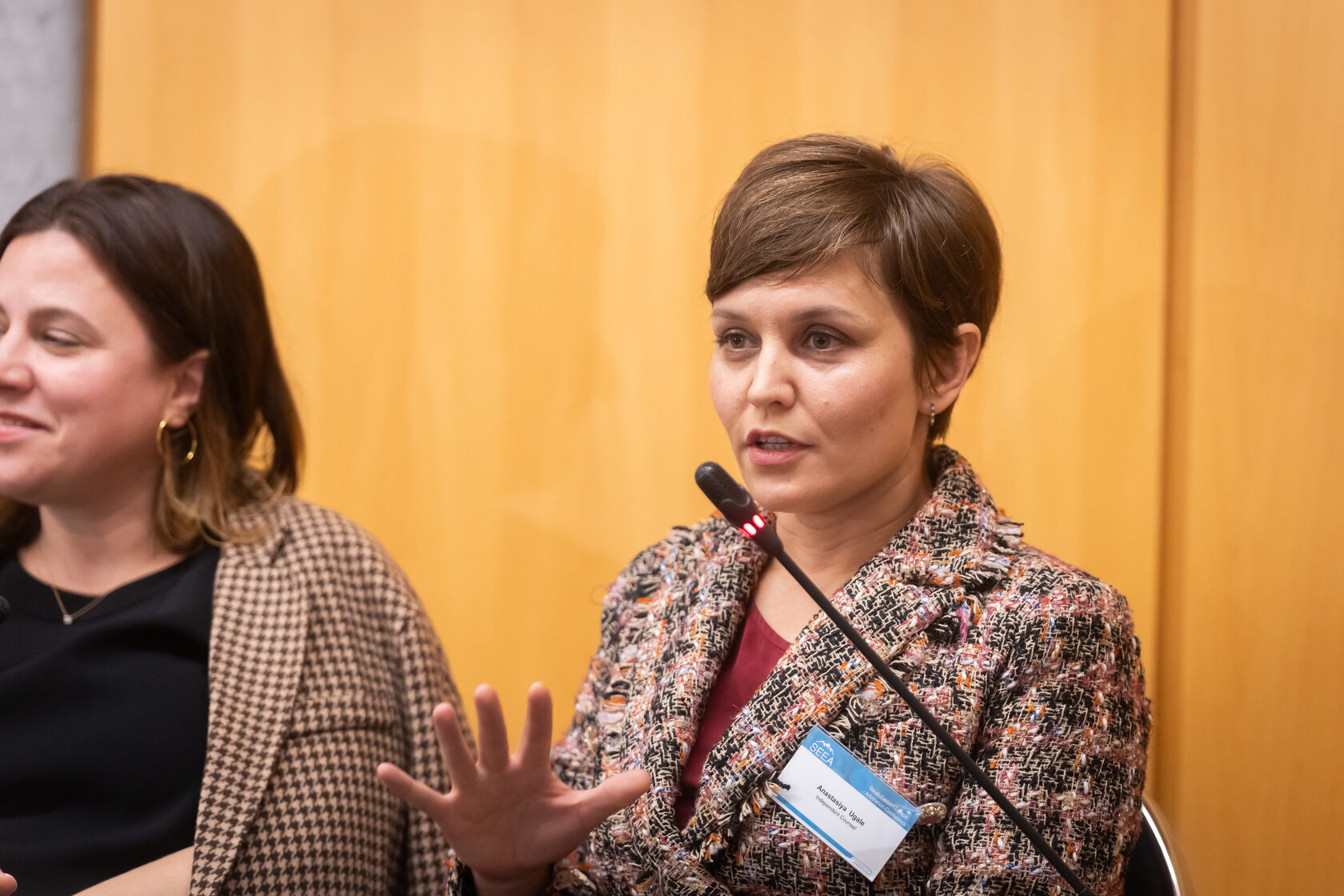
Moderated by Ileana Smeureanu, the panel featured Anastasiya Ugale alongside Marija Bojovic, Iuliana Iacob, Tania Iossifova, Alina Leoveanu, and Nicolae Reutoi. The conversation focused on the growing role of legal technology in arbitration practice, with particular attention to how solo practitioners and small firms can access and deploy these tools effectively.
Anastasiya contributed insights on the practical use of legal tech to streamline case management, enhance legal research, and improve efficiency without compromising quality. A central theme of the discussion was access to justice—specifically, whether emerging technologies can help level the playing field for smaller practices and their clients, or whether they risk reinforcing existing disparities.
The panel also explored challenges accompanying digital transformation, including data security, cost barriers, and the need for thoughtful integration of technology into arbitral workflows. The exchange underscored both the opportunities and the complexities of adopting legal tech in a way that supports fairness, efficiency, and transparency in arbitration.
Author: Anastasiya Ugale
The information on this page is for general information purposes only. Nothing on this or associated pages, comments, answers, blogs, inquiry requests and replies or other communications should be taken as legal advice for any individual case or situation. The information on this page is not intended to create, and receipt or viewing of this information and any communication submitted or received by means of this page do not constitute an attorney-client relationship.